

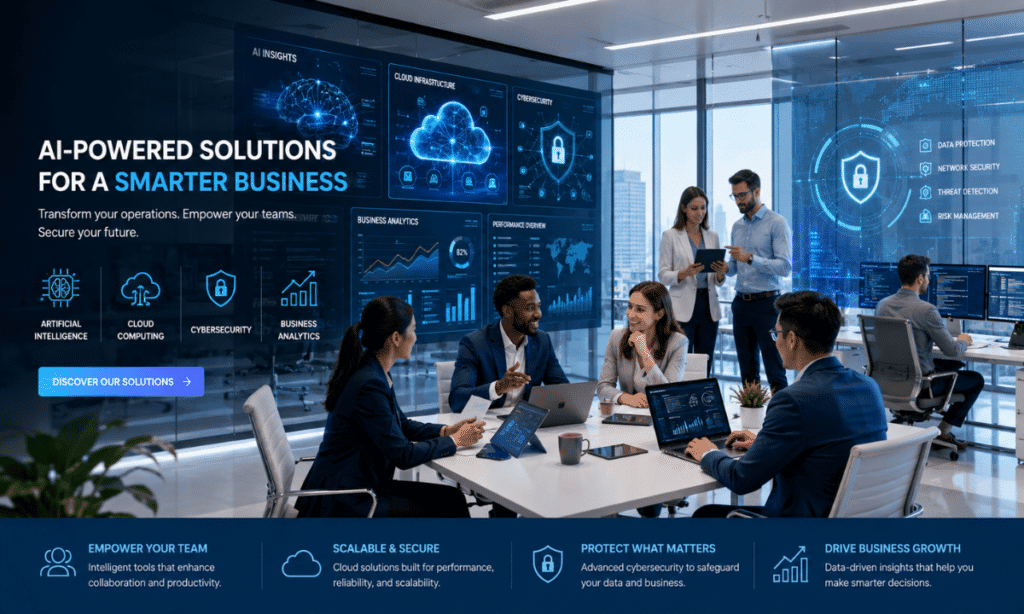
Why Tech Solutions Matter in 2026
Technology continues to transform how businesses operate. Companies that embrace modern tech solutions are finding new ways to increase productivity, improve customer experiences, and stay ahead of competitors. Whether you’re running a startup, a small business, or a large enterprise, investing in the right technologies is no longer optional—it’s essential.
In 2026, businesses face challenges such as rising customer expectations, cybersecurity threats, remote work demands, and increasing competition. Fortunately, innovative tech solutions can help overcome these obstacles while creating new opportunities for growth.
Organizations that adopt digital technologies often experience faster workflows, better decision-making, and improved operational efficiency. From artificial intelligence to cloud computing and automation tools, modern technology allows businesses to focus more on innovation and less on repetitive manual tasks.
If your goal is to improve performance, reduce costs, and remain competitive, understanding the latest tech solutions is the first step toward long-term success.
What Are Tech Solutions?
Tech solutions refer to software, hardware, digital services, and innovative technologies designed to solve business problems or improve operations. These solutions help organizations automate processes, secure sensitive information, communicate effectively, and analyze valuable data.
Examples include:
- Artificial Intelligence (AI)
- Cloud Computing
- Customer Relationship Management (CRM)
- Cybersecurity Software
- Project Management Tools
- Data Analytics Platforms
- Business Automation Software
- Collaboration Tools
Modern businesses combine several of these technologies to create an efficient digital ecosystem that supports sustainable growth.
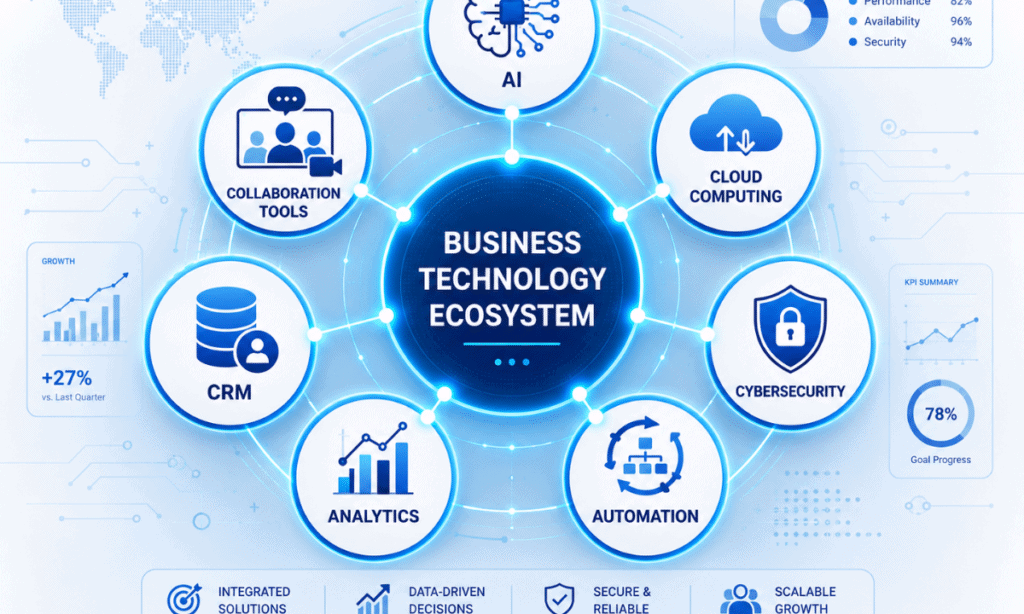
Benefits of Using Modern Tech Solutions
Before exploring the best technologies available in 2026, it’s important to understand why investing in tech solutions matters.
Increased Productivity
Automation eliminates repetitive tasks, allowing employees to focus on strategic work that creates value.
Lower Operating Costs
Cloud services, automation, and digital workflows significantly reduce expenses related to manual labor, paperwork, and outdated infrastructure.
Better Customer Experience
Businesses can deliver faster responses, personalized recommendations, and improved customer support through AI-powered systems.
Enhanced Security
Modern cybersecurity solutions protect businesses against ransomware, phishing attacks, and data breaches.
Improved Decision Making
Business intelligence platforms provide real-time insights that help leaders make smarter, data-driven decisions.
1. Artificial Intelligence (AI)
Artificial Intelligence has become one of the most influential tech solutions available today. AI helps businesses automate complex tasks, improve customer service, and analyze massive amounts of information in seconds.
Today, AI is used across nearly every industry—from healthcare and finance to marketing and retail. Companies leverage AI to create personalized customer experiences, forecast trends, optimize inventory, and even generate marketing content.
Benefits of AI
- Automates repetitive tasks
- Improves customer support with chatbots
- Predicts customer behavior
- Enhances marketing campaigns
- Reduces operational costs
- Improves business efficiency
Popular AI-powered tools include virtual assistants, predictive analytics platforms, content generation software, and intelligent customer service systems.
Businesses adopting AI early often gain a competitive advantage because they can deliver faster, smarter, and more personalized services.
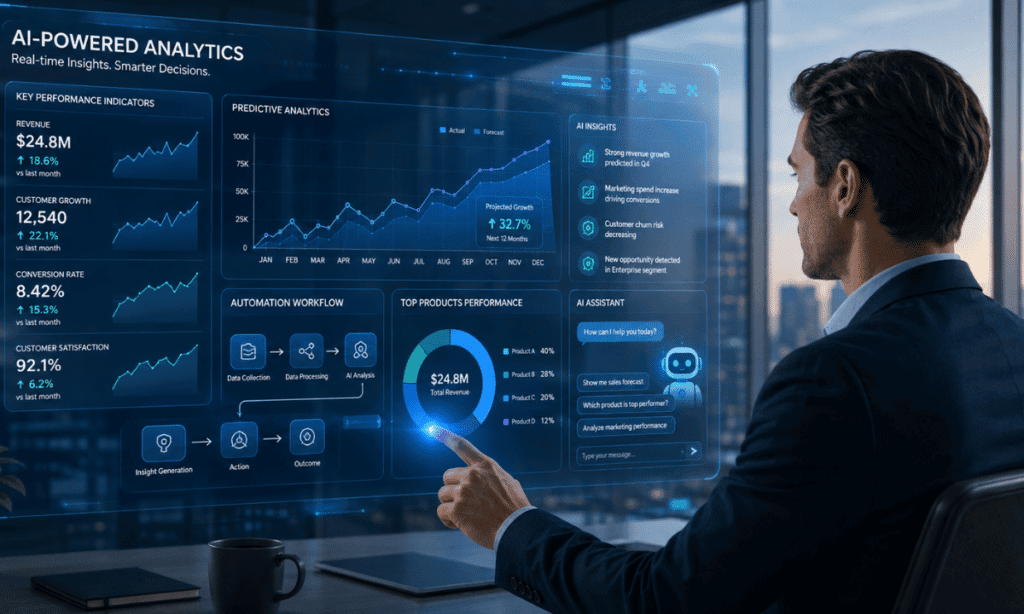
📷 Image Placement #3
Image Suggestion: A business professional interacting with an AI-powered analytics dashboard displaying predictive graphs, automation workflows, and chatbot icons.
Alt Text: Artificial intelligence improving business productivity and decision-making.
2. Cloud Computing
Cloud computing has transformed how businesses store, manage, and access data. Instead of relying on expensive on-site servers, organizations can securely access applications and files from anywhere with an internet connection.
Cloud technology supports remote work, enhances collaboration, and provides scalable infrastructure for growing businesses.
Advantages of Cloud Computing
- Secure data storage
- Remote accessibility
- Automatic software updates
- Lower IT costs
- Easy scalability
- Faster collaboration
Businesses no longer need to invest heavily in physical infrastructure. Instead, they can pay only for the services they use while maintaining flexibility and reliability.
Cloud platforms also offer advanced disaster recovery options, ensuring business continuity even during unexpected events.
3. Cybersecurity Solutions
As businesses become increasingly digital, cybersecurity is more important than ever. Cyber threats continue to evolve, targeting organizations of all sizes.
Cybersecurity solutions protect valuable business data, customer information, and financial records from unauthorized access.
Essential cybersecurity technologies include:
- Multi-factor authentication
- Endpoint protection
- Firewall systems
- Email security
- Data encryption
- Threat monitoring
- Backup and recovery solutions
Strong cybersecurity not only prevents financial losses but also builds customer trust and protects your company’s reputation.
Organizations that invest in cybersecurity reduce the risk of costly data breaches while ensuring compliance with industry regulations.
4. Business Automation Software
Business automation software eliminates repetitive administrative work, allowing teams to focus on strategic initiatives.
Automation tools can manage:
- Email marketing
- Customer follow-ups
- Invoice generation
- Appointment scheduling
- Workflow approvals
- Lead nurturing
- Inventory updates
Instead of manually completing routine tasks every day, businesses can automate them, saving hours of work each week.
Automation also minimizes human error, improves consistency, and increases overall efficiency.
5. Data Analytics Platforms
Data has become one of the most valuable assets for modern businesses. However, raw data alone is not useful without proper analysis.
Data analytics platforms transform complex information into meaningful insights that support smarter business decisions.
Companies use analytics tools to:
- Track website traffic
- Measure marketing performance
- Monitor customer behavior
- Forecast sales trends
- Identify profitable products
- Improve operational efficiency
Businesses that leverage analytics gain a deeper understanding of their customers and market trends, enabling them to make informed decisions and stay ahead of the competition.
6. Customer Relationship Management (CRM) Systems
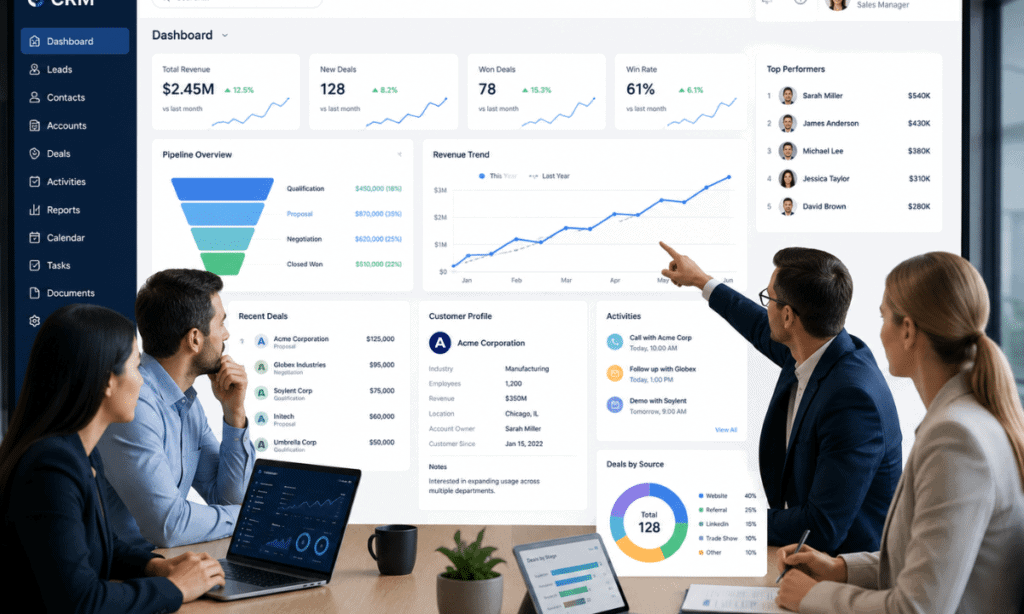
A Customer Relationship Management (CRM) system is one of the most valuable tech solutions for businesses that want to improve customer interactions and increase sales. A CRM centralizes customer information, making it easier to manage leads, track communications, and nurture long-term relationships.
Popular CRM platforms help businesses:
- Organize customer data
- Track sales pipelines
- Automate follow-up emails
- Manage customer support
- Improve team collaboration
- Generate sales reports
By using a CRM, businesses gain a 360-degree view of each customer, enabling personalized communication and stronger customer loyalty.
7. Collaboration and Communication Tools
As hybrid and remote work become the norm, collaboration tools are essential for maintaining productivity. These solutions enable employees to communicate, share files, manage projects, and collaborate in real time, regardless of location.
Key benefits include:
- Faster communication
- Better project management
- Real-time file sharing
- Increased team productivity
- Reduced email overload
- Improved transparency
Whether teams work in the office or remotely, collaboration platforms help keep everyone aligned and projects on schedule.
8. Internet of Things (IoT)
The Internet of Things (IoT) connects physical devices to the internet, allowing businesses to collect and analyze real-time data. Smart sensors, connected equipment, and automated monitoring systems improve operational efficiency across industries.
Examples of IoT applications include:
- Smart warehouses
- Fleet tracking
- Manufacturing automation
- Energy management
- Predictive equipment maintenance
- Smart office environments
IoT technology helps organizations reduce downtime, improve resource management, and make faster operational decisions.
📷 Image Placement #6
Image Suggestion: A smart factory with connected machinery, IoT sensors, cloud connectivity, and real-time monitoring dashboards.
Alt Text: Internet of Things technology improving business operations.
9. Blockchain Technology
Although often associated with cryptocurrencies, blockchain has many practical business applications. It provides a secure, transparent, and tamper-resistant way to store and verify data.
Businesses are using blockchain for:
- Secure financial transactions
- Supply chain transparency
- Digital identity verification
- Smart contracts
- Document authentication
- Fraud prevention
By reducing reliance on intermediaries and increasing trust, blockchain can streamline operations while improving security.
10. Business Intelligence (BI) Tools
Business Intelligence tools transform raw data into actionable insights through dashboards, reports, and visual analytics. Executives and managers use BI solutions to monitor key performance indicators (KPIs), identify trends, and make informed decisions.
Business Intelligence platforms help organizations:
- Monitor financial performance
- Analyze customer behavior
- Track marketing campaigns
- Improve forecasting
- Optimize operations
- Identify growth opportunities
When combined with AI and data analytics, BI tools provide a powerful foundation for strategic planning.
Comparison Table: Top Tech Solutions for Businesses
| Tech Solution | Primary Benefit | Best For |
|---|---|---|
| Artificial Intelligence | Automation and predictive insights | Businesses of all sizes |
| Cloud Computing | Flexible, secure access to data | Remote and hybrid teams |
| Cybersecurity | Protects business data | Every organization |
| Business Automation | Saves time and reduces manual work | Growing businesses |
| Data Analytics | Supports data-driven decisions | Marketing and operations |
| CRM Systems | Improves customer relationships | Sales and customer service |
| Collaboration Tools | Enhances teamwork | Remote and hybrid workplaces |
| Internet of Things | Real-time monitoring | Manufacturing and logistics |
| Blockchain | Secure and transparent transactions | Finance and supply chain |
| Business Intelligence | Strategic reporting | Executives and managers |
How to Choose the Right Tech Solutions
Selecting the best technology depends on your business goals, budget, and operational needs. Consider the following before investing:
- Identify your biggest business challenges.
- Prioritize solutions that deliver measurable ROI.
- Choose platforms that integrate with your existing tools.
- Ensure the solution is scalable as your business grows.
- Evaluate security features and vendor support.
- Train employees to maximize adoption and productivity.
A phased implementation often delivers better results than trying to deploy multiple technologies at once.
Frequently Asked Questions (FAQs)
1. What are tech solutions?
Tech solutions are software, hardware, and digital services that help businesses improve efficiency, automate tasks, enhance security, and solve operational challenges.
2. Why are tech solutions important for businesses?
They increase productivity, reduce costs, improve customer experiences, strengthen cybersecurity, and enable data-driven decision-making.
3. Which tech solution is best for small businesses?
Cloud computing, CRM software, automation tools, and cybersecurity solutions provide excellent value for small businesses due to their affordability and scalability.
4. How does AI help businesses?
AI automates repetitive tasks, improves customer service, analyzes data, predicts trends, and supports faster decision-making.
5. Are cloud-based solutions secure?
Yes. Reputable cloud providers use advanced encryption, access controls, and regular security updates to protect business data.
6. How can businesses start implementing tech solutions?
Start by assessing your business needs, setting clear objectives, selecting scalable tools, and providing proper employee training to ensure successful adoption.
Final Thoughts
Technology continues to reshape the business landscape, and organizations that embrace modern tech solutions are better equipped to thrive in an increasingly competitive market. From artificial intelligence and cloud computing to cybersecurity, automation, and business intelligence, these technologies help companies streamline operations, improve customer satisfaction, and make smarter decisions.
The key is not adopting every available tool but choosing solutions that align with your business objectives and deliver measurable value. By investing strategically in technology today, your business will be better prepared to innovate, adapt, and grow well beyond 2026.
Call to Action
Ready to transform your business with the latest tech solutions? Start by evaluating your current processes, identify areas where technology can make the biggest impact, and implement scalable solutions that support long-term growth. The sooner you embrace digital innovation, the greater your competitive advantage will be.

Muse runs BikoMarketing, a publication focused on helping small
business owners and solo founders choose the right marketing tools,
build their tech stack, and grow without overspending on software
they don’t need.
Coverage includes email marketing platforms, marketing automation,
SaaS reviews, and tech recommendations — written for people who
want real answers, not marketing fluff.
📩 contact@bikomarketing24@gmail.com