

If you want to grow online, you need more than random posts, paid ads, or a nice-looking website. You need digital marketing strategies that actually connect with the right audience, build trust, and turn attention into action.
A lot of businesses spend time and money on marketing without seeing much return. The problem usually is not effort. It is lack of direction. Without a clear plan, even good content and strong offers can get lost.
The good news is that effective digital marketing does not have to be complicated. When the right pieces work together, you can create a system that helps your business attract visitors, generate leads, and increase sales over time.
In this guide, you will learn practical digital marketing strategies that drive real results. These strategies are useful for small businesses, startups, personal brands, and growing online companies that want steady progress instead of guesswork.
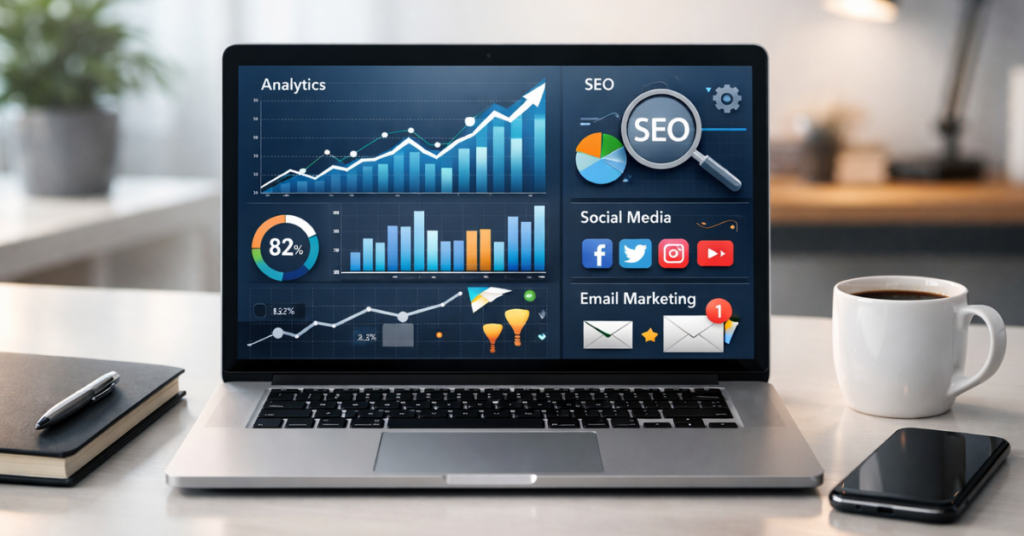
Why Digital Marketing Strategies Matter
Digital marketing is not just about being active online. It is about using the right channels in the right way to reach business goals.
Strong digital marketing strategies help you:
- Reach the right audience
- Build brand awareness
- Increase website traffic
- Generate quality leads
- Improve conversions
- Strengthen customer relationships
- Support long-term business growth
Without strategy, marketing often becomes reactive. You post when you remember. You run ads without a clear goal. You write content with no real keyword plan. That approach usually leads to wasted time and weak results.
A solid strategy helps you focus on what matters and measure what is working.
Start With Clear Goals
Before using any marketing channel, define what success looks like for your business.
Your goals might include:
- Increasing website traffic
- Getting more email subscribers
- Generating leads through contact forms
- Selling products or services
- Growing social media engagement
- Building trust in your niche
When your goals are clear, your digital marketing strategies become easier to plan. You know what type of content to create, where to promote it, and what actions you want visitors to take.
For example, if your goal is lead generation, your website should focus on clear service pages, strong calls to action, and contact forms. If your goal is traffic, then SEO and content marketing should become a major part of your plan.
Know Your Audience First
One of the most important digital marketing strategies is understanding who you are trying to reach.
You need to know:
- Who your ideal customer is
- What problems they want to solve
- What they search for online
- What content they engage with
- What makes them trust a brand
When you understand your audience, your marketing becomes more relevant. Your website copy, blog posts, emails, and social content all become stronger because they speak directly to real needs.
Try to answer simple questions like:
- What does my audience want?
- What are they struggling with?
- What kind of language do they use?
- What would make them choose my brand?
The better you understand your audience, the easier it becomes to create digital marketing strategies that drive results.
Build a Strong SEO Foundation
Search engine optimization is one of the most valuable long-term digital marketing strategies because it helps people find your business through search engines.
SEO is not just about adding keywords everywhere. It is about creating useful content, improving site structure, and making your website easier for both users and search engines to understand.
Here are the key parts of a strong SEO foundation.
Use Targeted Keywords
Choose keywords that match what your audience is actually searching for. In this article, for example, the target phrase is digital marketing strategies and the supporting phrase is drive results.
Use your target keyword naturally in:
- The title
- The introduction
- Subheadings where relevant
- The main content
- The conclusion
- Image alt text if appropriate
Do not force it. Natural use is better than overuse.
Create Helpful Content
Search engines want to show content that is useful and relevant. That means your blog posts should answer real questions, explain topics clearly, and provide practical value.
When your content helps people, it is more likely to rank, get shared, and keep visitors on your site longer.
Improve On-Page SEO
Basic on-page SEO still matters. Make sure each page or post has:
- One clear H1 title
- Organized H2 and H3 headings
- Short paragraphs
- Internal links to related pages
- A strong meta title and meta description
- Fast loading performance
- Mobile-friendly design
SEO takes time, but it is one of the best ways to build steady traffic and long-term visibility.
Use Content Marketing to Build Trust
Content marketing is one of the most effective digital marketing strategies because it attracts people before they are ready to buy and gives them a reason to trust your brand.
Good content helps you show expertise, answer questions, and build authority in your niche.
Useful content types include:
- Blog posts
- Guides
- Tutorials
- Checklists
- Comparison articles
- Case studies
- Product reviews
- Frequently asked questions
A strong content strategy usually includes a mix of evergreen and timely content.
Evergreen Content
Evergreen content stays useful over time. It can continue bringing traffic months after publication.
Examples include:
- Beginner guides
- How-to articles
- Definitions and explanations
- Best practices
- Step-by-step tutorials
Intent-Based Content
Intent-based content is written for people who are closer to taking action. These visitors may be ready to compare options, request a quote, or make a purchase.
Examples include:
- Best tools for small businesses
- Service comparison pages
- Product reviews
- Pricing and feature breakdowns
- Solution-focused landing pages
If you want digital marketing strategies that drive results, content marketing should be a key part of your plan.
Focus on High-Quality Website Pages
Impact-Site-Verification: a955a2bc-7b44-4492-a707-a1d3056e6948Your website is the center of your digital marketing. Social media platforms can help you get attention, but your website is where trust and conversion happen.
Some businesses focus too much on traffic and not enough on the pages where that traffic lands. If visitors arrive and do not understand who you help, what you offer, or what to do next, your marketing will not perform well.
Important website pages include:
- Homepage
- About page
- Services page
- Contact page
- Blog
- Review or case study pages
- Privacy Policy, Terms, and Disclaimer pages
Each page should have a clear purpose. Your messaging should be simple, your design should be clean, and your calls to action should be easy to find.
A good website supports every other digital marketing strategy you use.
Use Email Marketing to Build Relationships
Email marketing remains one of the most reliable ways to drive results because it gives you direct access to your audience.
Unlike social media, where reach can change at any time, email lets you communicate with people who already showed interest in your brand.
A strong email strategy can help you:
- Welcome new subscribers
- Share valuable content
- Promote offers
- Build trust over time
- Bring visitors back to your website
Grow Your Email List the Smart Way
Offer a simple reason for people to subscribe. This could be:
- A free guide
- A checklist
- A resource list
- A mini course
- Exclusive updates
Make sure your signup form is easy to find and the benefit is clear.
Send Useful Emails
Do not only send promotional emails. Share helpful tips, blog content, updates, and insights that make your audience want to keep opening your messages.
The goal is not just to collect emails. The goal is to build a connection.
Use Social Media With Purpose
Social media can support your brand, but it works best when used strategically.
A lot of businesses post content every day without a clear goal. That often leads to low engagement and little return.
Instead, choose platforms that fit your audience and create content that supports your overall marketing goals.
For example:
- Use Instagram for visual branding and short tips
- Use Facebook for community building and promotions
- Use LinkedIn for business insights and professional content
- Use Pinterest for evergreen traffic and searchable visuals
- Use YouTube or short-form video for education and trust building
Social media should not replace your website or SEO strategy. It should support them.
One smart approach is to repurpose your blog content into smaller social posts. That saves time and keeps your messaging consistent across channels.
Invest in Conversion Optimization
Getting traffic is only part of the process. If your website does not convert, even good traffic will not deliver strong business results.
Conversion optimization means improving the chances that visitors take action.
This could mean:
- Filling out a form
- Booking a call
- Joining your email list
- Clicking to a service page
- Making a purchase
Simple ways to improve conversions include:
Use Clear Calls to Action
Tell visitors what to do next. Good calls to action include:
- Get Started
- Book a Free Consultation
- Contact Us Today
- Read More
- Request a Quote
Make Pages Easy to Read
Use short paragraphs, strong headings, and clean spacing. People should understand your message quickly.
Highlight Benefits, Not Just Features
Do not only describe what you offer. Explain how it helps the customer.
For example, instead of saying “we provide SEO services,” say “we help your business get found online and attract more qualified traffic.”
Build Trust
Trust signals matter. Add:
- Reviews
- Testimonials
- Clear contact details
- Professional design
- Honest messaging
- Useful legal pages
Conversion optimization is one of the digital marketing strategies that often gets ignored, but it can make a huge difference.
Use Paid Advertising Carefully
Paid ads can drive faster results, but they work best when your offer and website are already strong.
If you run ads too early, you may spend money sending traffic to pages that are not ready to convert.
Paid advertising can be useful for:
- Promoting services
- Generating leads
- Retargeting visitors
- Testing offers
- Growing brand awareness
Popular options include:
- Google Ads
- Facebook Ads
- Instagram Ads
- LinkedIn Ads
- Pinterest Ads
Start with a clear goal, a specific audience, and a realistic budget. Then track the results closely.
The best paid campaigns support a bigger strategy. They are not a replacement for SEO, content, or good website structure.
Measure What Matters
If you want digital marketing strategies that drive results, you need to track performance.
Important metrics may include:
- Organic traffic
- Bounce rate
- Conversion rate
- Email signups
- Click-through rate
- Cost per lead
- Time on page
- Keyword rankings
Use tools like analytics dashboards, search data, and form tracking to understand what is working.
Do not measure everything just because you can. Focus on the numbers that connect to your goals.
For example:
- If your goal is leads, track form submissions and landing page performance
- If your goal is SEO growth, track organic traffic and rankings
- If your goal is email growth, track signup rate and email engagement
Good marketing decisions come from useful data, not guesses.
Keep Your Strategy Consistent
Consistency matters more than doing everything at once.
Many businesses fail with digital marketing because they try too many things for a short time, then stop before results appear.
It is usually better to do a few things well:
- Publish quality blog content regularly
- Improve SEO step by step
- Build your email list
- Stay active on one or two strong social platforms
- Optimize your website over time
Small consistent improvements often bring better results than random bursts of activity.
Common Mistakes to Avoid
Even strong businesses can slow their growth by making simple marketing mistakes.
Here are a few to avoid:
Trying Every Platform at Once
You do not need to be everywhere. Focus on the channels that fit your audience and business model.
Ignoring SEO
SEO takes time, but ignoring it means missing long-term traffic opportunities.
Writing Without Strategy
Content should support search intent, brand authority, and business goals.
Weak Website Messaging
If visitors do not quickly understand what you offer, they will leave.
No Follow-Up System
If someone visits your site and leaves, do you have a way to bring them back? Email marketing and retargeting can help.
Expecting Instant Results
Real growth often comes from steady work over time. The most effective digital marketing strategies are not always the fastest, but they are often the most sustainable.
Final Thoughts
The best digital marketing strategies are not about doing more. They are about doing the right things with clarity and consistency.
If you want to drive results, start with strong goals, understand your audience, build a solid website, invest in SEO, create useful content, and focus on conversions. Add email marketing, social media, and paid ads in a way that supports your bigger strategy.
You do not need a huge team or a massive budget to make progress. You need a clear plan, the right priorities, and a willingness to improve over time.
When digital marketing is done well, it creates more than traffic. It creates trust, stronger relationships, and real business growth.
If your goal is long-term success online, now is the right time to build digital marketing strategies that drive real results.
FAQ
What are digital marketing strategies?
Digital marketing strategies are planned methods businesses use to promote their brand online, attract the right audience, and achieve goals such as traffic, leads, or sales. These strategies can include SEO, content marketing, email marketing, social media, and paid advertising.
Which digital marketing strategy works best for beginners?
For beginners, a good starting point is SEO, content marketing, and email marketing. These channels help build long-term visibility, trust, and audience connection without depending only on paid traffic.
How long does it take for digital marketing strategies to drive results?
It depends on the strategy. Paid ads can show results quickly, while SEO and content marketing usually take longer. In many cases, steady effort over a few months brings stronger and more sustainable growth.
Why is SEO important in digital marketing?
SEO helps your website appear in search results when people look for information, products, or services related to your business. It is important because it can bring consistent traffic and support long-term growth.
How can I improve my marketing results online?
Start by setting clear goals, understanding your audience, improving your website, creating useful content, and measuring results. Focus on a few strong channels instead of trying everything at once.

Muse runs BikoMarketing, a publication focused on helping small
business owners and solo founders choose the right marketing tools,
build their tech stack, and grow without overspending on software
they don’t need.
Coverage includes email marketing platforms, marketing automation,
SaaS reviews, and tech recommendations — written for people who
want real answers, not marketing fluff.
📩 contact@bikomarketing24@gmail.com